LIVE · cybersecurity feed
vulnerabilitycritical

New Januscape Linux flaw allows VM escape on Intel, AMD devices
zeroday.news·1d ago

A newly disclosed vulnerability in the Linux kernel, named Januscape, allows an attacker to escape a virtual machine and execute code on the host system. The flaw, present for approximately 16 years before being patched in June 2026, stems from a use-after-free weakness within the shadow MMU emulation of KVM/x86, the virtualization technology for Intel and AMD processors.

Discovered by security researcher Hyunwoo Kim, the vulnerability, tracked as CVE-2026-53359, was reportedly used as a zero-day exploit in Google's kvmCTF vulnerability reward program. Successful exploitation requires root access within the guest virtual machine, a common configuration for public cloud instances.
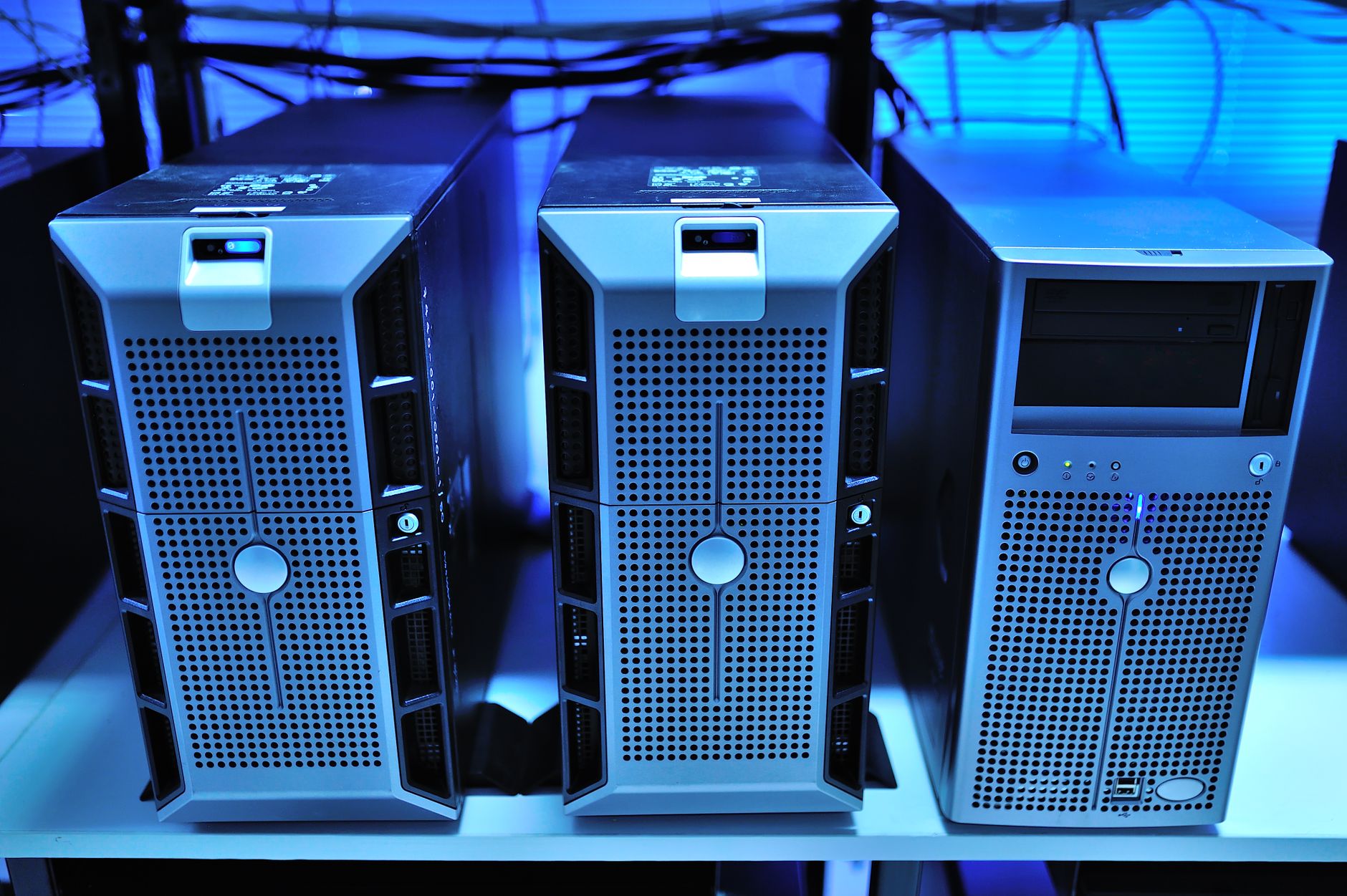
An attacker who gains root privileges inside a compromised virtual machine could potentially execute arbitrary code on the host system with root privileges. This could lead to the takeover of the host and all other virtual machines running on it. Alternatively, an attacker could trigger a host kernel panic, causing a denial-of-service condition that would take down all other tenant virtual machines on the same physical server.

Kim highlighted that Januscape is significant as it is the first guest-to-host escape vulnerability that can be triggered on both Intel and AMD processor architectures, making it a broad threat to multi-tenant cloud environments. This includes major public cloud providers such as Google Cloud and Amazon Web Services.

In certain Linux distributions, like Red Hat Enterprise Linux, where the `/dev/kvm` device is world-writable, unprivileged attackers may also be able to exploit CVE-2026-53359 to gain root permissions on unpatched systems.

The security researcher has published a technical explanation and a proof-of-concept exploit that can induce a host kernel panic. A full guest-to-host escape exploit is not expected to be released in the near future.

Administrators operating KVM/x86 hosts that support multiple tenants should verify that patch commit 81ccda30b4e8 has been applied to their host kernel to mitigate this vulnerability.

In a separate disclosure in May 2026, Kim also revealed Dirty Frag, a Linux local privilege escalation flaw. Dirty Frag combines vulnerabilities in xfrm-ESP (CVE-2026-43284) and RxRPC (CVE-2026-43500) to achieve root access on major Linux distributions. Kim noted that attackers without initial root access on a target system could potentially chain Dirty Frag and Januscape to achieve a full system compromise.


vulnerabilitylinuxvm escapekernelvirtualization
← Back to latest

More News

view all →
zeroday.news · 3h ago·critical

Ubiquiti Patches Critical UniFi Flaws Across Connect, Talk, Access, Protect, and OS

Ubiquiti has released security updates to address several critical vulnerabilities affecting its UniFi product line, including UniFi Connect, Talk, Access, Protect, and OS. These flaws could allow attackers to escalate privileges or execute arbitrary commands on affected devices. While no active exploitation has been reported for these specific vulnerabilities, the company has previously seen its UniFi OS and Edge OS products targeted by threat actors.

zeroday.news · 3h ago·critical

Attackers using Langflow flaw for credential harvesting (CVE-2026-55255)

CISA has issued a warning regarding a critical vulnerability (CVE-2026-55255) in the Langflow AI framework, which is being actively exploited by attackers. The flaw allows authenticated users to execute arbitrary flows belonging to other users, potentially leading to the theft of sensitive credentials and data exposure, especially in multi-tenant environments. US federal agencies have been mandated to patch this vulnerability by July 10th.

zeroday.news · 2h ago·high

China-Linked APT Expands Arsenal With New ‘Leash’ Backdoors

A China-linked advanced persistent threat (APT) group, identified as LapDogs, has reportedly enhanced its malicious toolkit. Security researchers have observed the deployment of three new backdoors: LongLeash, DogLeash, and JarLeash, which are designed to compromise small office/home office (SOHO) routers.

zeroday.news · 2h ago·high

RedWing Android Spyware Sold as a Service on Telegram

A new Android spyware called RedWing is being offered as a service on Telegram, allowing less sophisticated attackers to compromise phones and steal banking information. Researchers have identified it as a polished malware-as-a-service operation with extensive documentation and a subscription model, potentially linked to Russian threat actors. RedWing employs fake login overlays, SMS interception, call forwarding, and even screen control to harvest credentials and conduct further malicious activities.

zeroday.news · 3h ago·high

Operationalizing Day Minus Seven: The Cloud-Native ROC

The article introduces the concept of a Risk Operations Center (ROC) as a necessary evolution for cybersecurity teams facing AI-driven threats. It argues that traditional risk management models are insufficient due to the speed at which AI can discover and exploit vulnerabilities, especially in cloud environments. A ROC, powered by platforms like Qualys Enterprise TruRisk Management (ETM), aims to unify disparate security findings, hyper-prioritize risks based on exploitability and business impact, and enable autonomous remediation to keep pace with attackers.

zeroday.news · 3h ago·high

Armored Likho Hits Government, Energy Sectors With BusySnake Stealer

Cybersecurity researchers have identified a new threat actor, dubbed Armored Likho, targeting government and energy sectors in Russia, Kazakhstan, and Brazil with a sophisticated phishing campaign. The operation utilizes a custom-built Python infostealer named BusySnake, designed to steal credentials, sensitive documents, and other high-value data. The attackers employ AI-generated payloads to obscure their activities and maintain persistence through various methods, including reverse SSH tunneling.