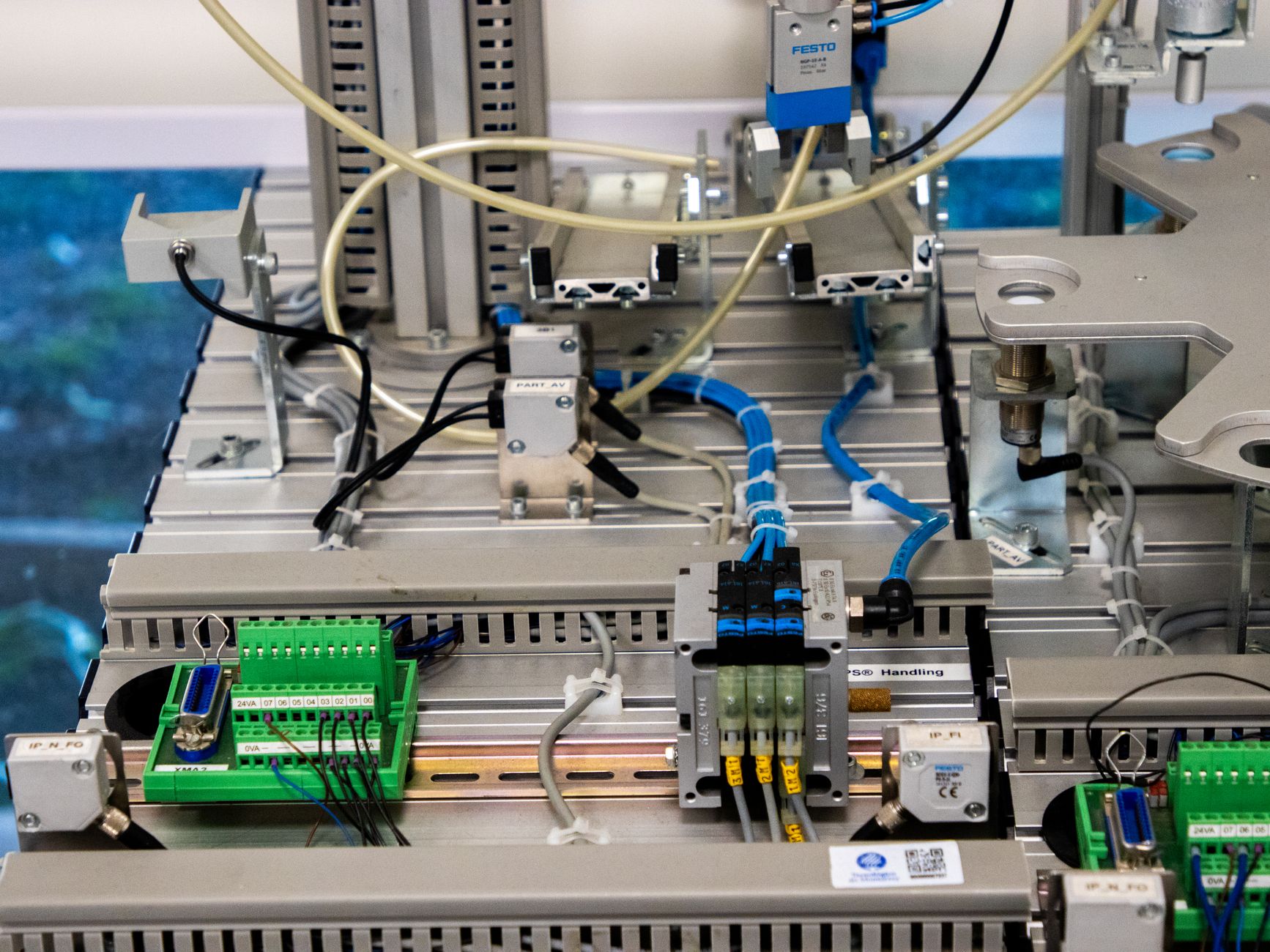
The U.S. government has issued a warning regarding an active threat targeting critical infrastructure organizations within the United States. This threat involves the use of artificial intelligence (AI)-generated exploit scripts. These scripts are reportedly being used to target Siemens S7 Series Programmable Logic Controllers (PLCs).
The reported activity focuses on reconnaissance and the development of capabilities against these industrial control systems. The AI-generated scripts are described as being disguised as legitimate monitoring tools, likely to evade detection by operational technology (OT) security systems or personnel. This suggests an attempt to blend malicious activity with normal network traffic and system operations, making identification more challenging.
Siemens S7 PLCs are widely deployed in various critical infrastructure sectors globally, including energy, water, manufacturing, and transportation. These devices are fundamental to the automation and control of industrial processes. A compromise of such systems could lead to disruption of services, equipment damage, or even safety incidents depending on the specific function of the PLC and the nature of the exploit.
Exploits targeting PLCs often aim to manipulate logic, alter operational parameters, or disable the controller entirely. Reconnaissance in this context would involve mapping the network, identifying specific PLC models and firmware versions, and understanding the industrial processes they control. Capability development would then involve crafting specific commands or sequences to achieve a malicious objective, potentially leveraging known vulnerabilities or misconfigurations.
Mitigation for such threats typically involves a multi-layered approach. This includes robust network segmentation to isolate OT networks from IT networks and the internet, regular patching and firmware updates for PLCs and associated systems, and strict access controls. Furthermore, implementing intrusion detection systems (IDS) and security information and event management (SIEM) solutions tailored for OT environments can help detect anomalous activity, including the presence of disguised scripts or unusual communication patterns. Employee training on social engineering and phishing awareness is also crucial, as initial access often relies on human factors.
The emergence of AI-generated exploit scripts represents an evolving challenge in cybersecurity. While the core attack vectors against industrial control systems often remain consistent, the use of AI could potentially accelerate the development of sophisticated exploits, improve their evasiveness, and lower the barrier to entry for attackers. This development underscores the ongoing need for critical infrastructure operators to continuously adapt their security postures and invest in advanced threat detection and prevention technologies.