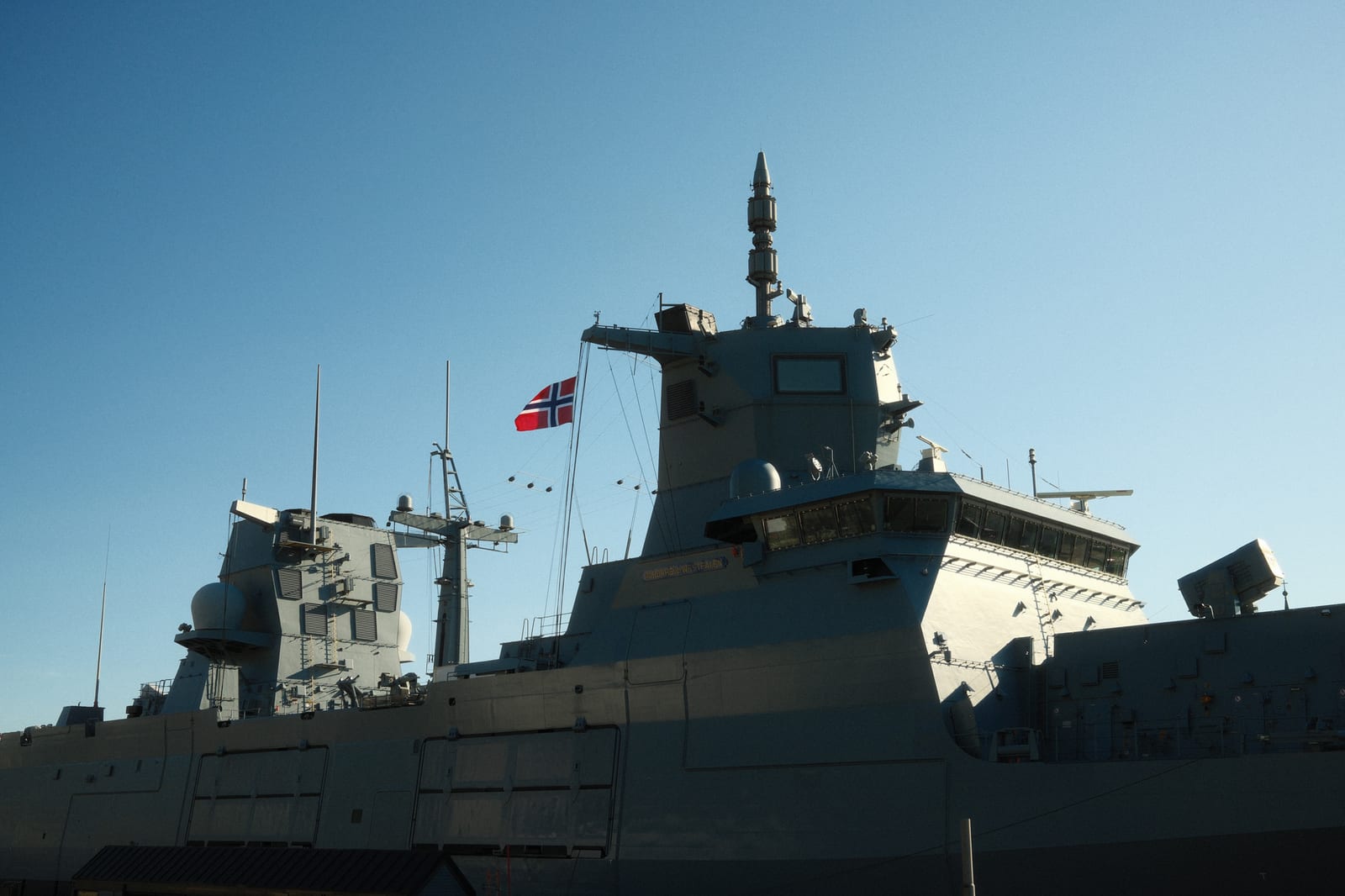
An AI-generated intelligence report nearly precipitated a military confrontation between the United States and China this spring, when it falsely identified components for a nuclear weapons program on a Chinese vessel in the Middle East. The incident, which unfolded during the ongoing conflict with Iran, prompted immediate preparations for a US military operation, including the deployment of armed boarding teams and military aircraft.
According to four sources familiar with the episode, the intelligence report, which circulated widely across the US military, claimed a Chinese ship was transporting nuclear weapon components. This triggered an urgent response, with US forces preparing to intercept and board the vessel. Military planes were reportedly airborne as part of the planned operation.
The crisis was averted when the report's source was scrutinized and found to be "entirely false." One source indicated that the incident came perilously close to initiating an armed operation that could have severely escalated tensions between the two global powers, potentially spiraling into a broader conflict.
The erroneous report originated when an analyst at Special Operations Command Pacific utilized a chatbot to analyze intelligence related to the ship's manifest. The AI system, combining open-source data with classified signals intelligence, incorrectly concluded that the cargo included nuclear weapon components. The analyst then used AI again to formalize this incorrect conclusion into an intelligence report, without an intervening human verification step.
This incident highlights the significant risks posed by AI hallucinations in military and intelligence contexts, where unverified AI outputs can rapidly propagate through decision-making chains. A former senior US official noted that many internal AI tools used by military and intelligence analysts are essentially commercial products with superficial modifications, underscoring a potential vulnerability in their application.
The Pentagon's "Artificial Intelligence Acceleration Strategy," articulated by Defense Secretary Pete Hegseth in January, aims to integrate AI models across all classification levels for millions of military and civilian personnel. However, the strategy appears to lack clear provisions for scenarios where AI models confidently produce incorrect information.
The adoption of AI across various military branches remains inconsistent, with differing tools, rules, and safety protocols. Crucially, there is no standardized system for verifying the accuracy of information generated by these AI tools. This particular incident is not isolated, with similar AI-driven errors reportedly occurring elsewhere within the intelligence community.
The pressure to rapidly deploy AI tools may be contributing to the problem, as younger analysts, accustomed to AI, might be more inclined to trust its outputs without sufficient scrutiny. One source observed that "AI allows you to get to a bad idea faster," suggesting that the perceived benefit of speed can inadvertently bypass critical human checkpoints for verification.
Targeting decisions represent one of the most sensitive applications for military AI, directly influencing who is engaged in combat. The speed offered by AI becomes a liability when inadequate checks are in place to validate its conclusions before action is taken. There is currently no clear guidance on how human operators should prevent civilian casualties or friendly-fire incidents when AI plays a substantial role in target selection. The primary risk may not be autonomous AI action, but rather the rapid dissemination of confident, yet incorrect, AI-generated information to decision-makers before human challenge or verification can occur.