
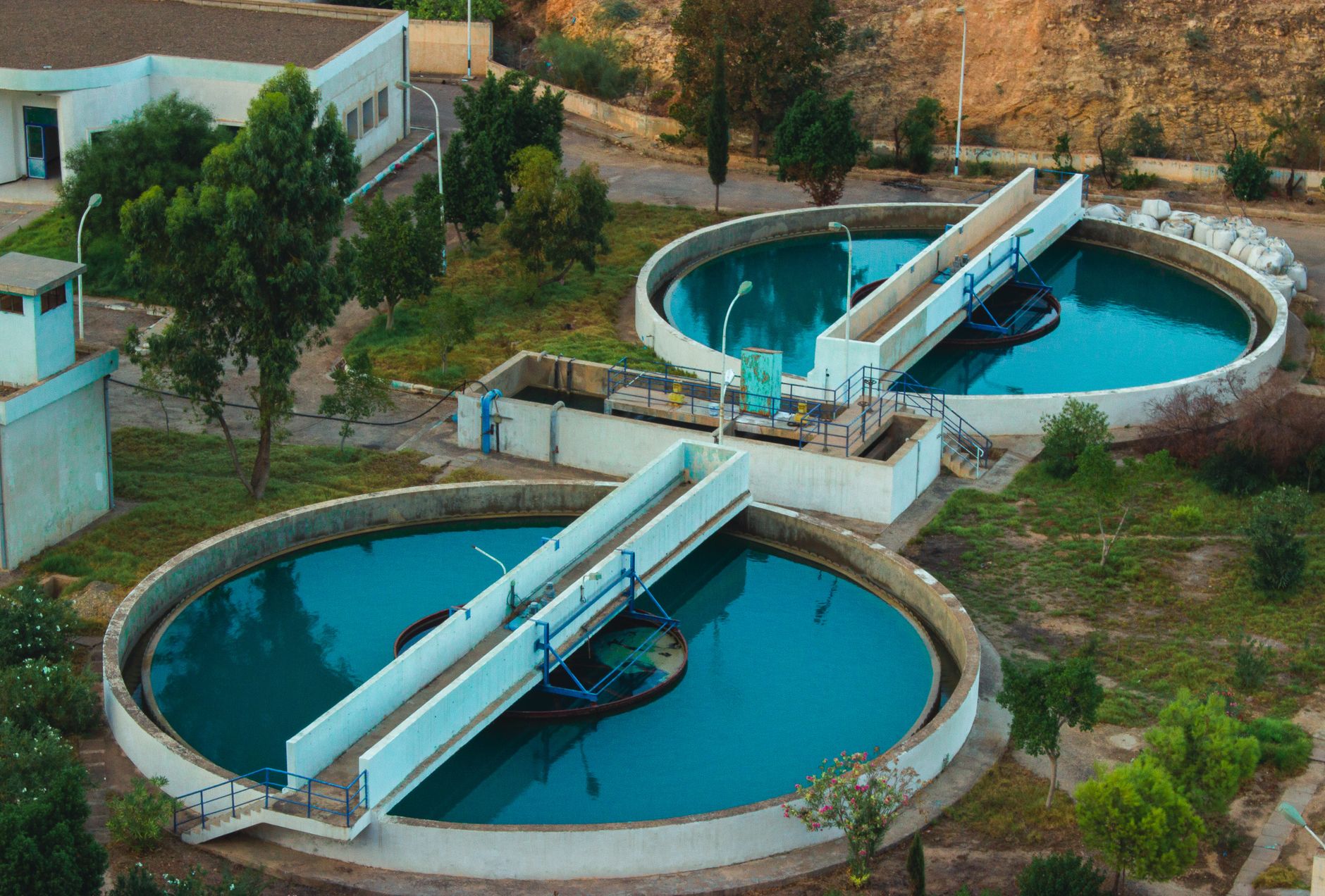
Following suspected cyberattacks on water systems across at least 12 US states, likely perpetrated by Iran, a former NSA chief has strongly advised that industrial control systems like programmable logic controllers (PLCs) should not be connected to the internet. He emphasized the need for higher cybersecurity standards to defend these critical infrastructure components, noting that Iranian actors have a history and capability for such attacks.

Retired General Paul Nakasone, former director of the National Security Agency, has advocated for disconnecting water system controllers from the internet, citing recent suspected Iranian cyberattacks on US water facilities. Speaking at the DEF CON conference, Nakasone emphasized the need for higher cybersecurity standards, stating that programmable logic controllers (PLCs) used in water systems should not be internet-connected.
The FBI confirmed in late July that it is investigating attacks by "malicious cyber actors" targeting operational technology devices, including PLCs. These devices are crucial for monitoring sensor data, such as tank levels, and controlling pumps in water and wastewater infrastructure. While neither the FBI nor the current administration has officially attributed the attacks, some private-sector security researchers strongly suspect Iran-linked groups are responsible.
Cynthia Kaiser, SVP at Halcyon Ransomware Research Center, expressed confidence at DEF CON that Iran is behind the recent disruptions, noting that Iranian actors have a history of targeting such devices for years. Nakasone echoed this sentiment, pointing to Iran's proven capability and intent in cyber warfare, given ongoing conflicts. He believes the federal government is taking a "measured approach" to public attribution.
Nakasone highlighted the significant vulnerability of US water systems, which comprise approximately 50,000 municipalities and supply 90 percent of the nation's water. These facilities often suffer from underfunding, limited IT staff, and a lack of dedicated cybersecurity personnel, creating a vast and exposed attack surface.
To address these vulnerabilities, Nakasone stressed the importance of collaborative defense strategies. He pointed to initiatives like DEF CON Franklin, a two-year-old project where volunteer hackers assist in securing water facilities. Nakasone is also involved with Vanderbilt University’s Institute of National Security and its Wicked Problems Lab, as well as Project Chimera, an open-source cybersecurity platform designed to enhance critical infrastructure resilience. He emphasized that effective defense requires a more involved, partnership-driven approach than currently exists.

A weakness has been identified in Tenda CP3 27.5.57.101. This issue affects some unknown processing of the file Net/NetCheckPing.cpp. This manipulation of the argument interface_name/host causes os command injection. The attack can be initiated remotely.
A security flaw has been discovered in Tenda CP3 27.5.57.101. This vulnerability affects the function SystemAsh of the file Apis/system.c of the component Kylin. The manipulation of the argument AlarmVoiceURL results in os command injection. It is possible to launch the attack remotely.

OpenAI has announced a $1 billion commitment to provide subsidized access to its Daybreak AI cybersecurity tools for under-resourced critical infrastructure defenders. The initiative, named Daybreak for Frontline Defenders, will offer AI models, training, and technical support over the next six months, prioritizing water and wastewater utilities, electric grid operators, and local government entities. This move aims to equip organizations with limited budgets and staff against increasingly sophisticated cyber threats.

Attackers are exploiting a new unpatched vulnerability in Magento Open Source and Adobe Commerce that lets them run malicious code on an online store's server without logging in, Dutch e-commerce security company Sansec said in an advisory published on September 5. Sansec, which discovered the flaw and named it StyleSmuggler, said attacks started on September 4. "Sansec is publishing early
In BPF instructions that load/store a value from/to a scratch memory register the register index is an unsigned 32-bit integer and must not exceed 15, but libpcap BPF interpreter does not validate the value. In particular uncommon use cases a crafted filter program can cause the interpreter to try reading and writing the OS process memory in the 16GiB starting at the current stack frame on 64-bit architectures and in the entire address space on 32-bit architectures.

Attackers are exploiting two new PaperCut flaws to steal credentials and gain privileged access in education-sector attacks across the U.S. and Europe. Attackers are exploiting two recelty disclosed PaperCut flaws, CVE-2026-81578 and CVE-2026-82078, in attacks targeting schools and other education organizations in the U.S. and Europe, as reported by TheHackerNews. Arctic Wolf researchers observed




