
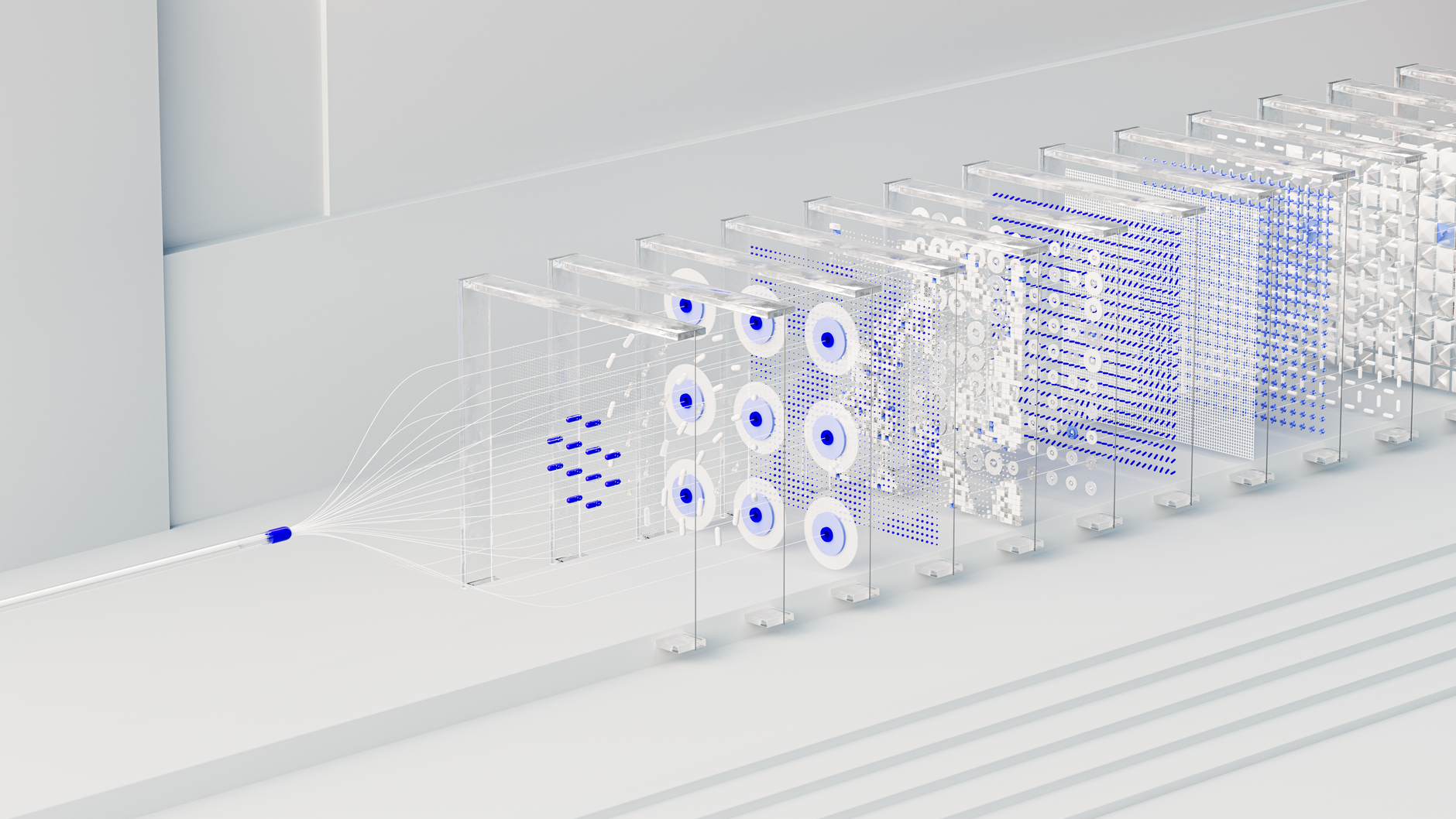
Google’s researchers and engineers developed the Homomorphic Encryption Intermediate Representation (HEIR) compiler project, an open-source compiler toolchain and development platform for homomorphic encryption. It can convert pre-trained AI models designed to operate on unencrypted data into models that process encrypted inputs. The platform helps application developers, compiler engineers, hardw

Google has released the Homomorphic Encryption Intermediate Representation (HEIR) compiler project, an open-source toolchain and development platform designed to enable artificial intelligence models to process encrypted data. This initiative, first announced in 2023, allows pre-trained AI models that typically operate on unencrypted information to be converted into versions capable of handling encrypted inputs.
The HEIR platform is intended to support various stakeholders, including application developers, compiler engineers, hardware designers, and cryptography researchers, in creating privacy-focused software systems. Its core function is to simplify the development, optimization, and deployment of fully homomorphic encryption (FHE), a technology that permits computations on data while it remains encrypted, thereby safeguarding sensitive information.
While homomorphic encryption traditionally incurs substantial computational overhead, Google states that these costs are diminishing, making the technology increasingly viable for privacy-preserving data processing in sectors like healthcare and finance. The HEIR project aims to further reduce these costs and improve efficiency.
According to a staff software engineer at Google, HEIR provides cryptographers with a robust infrastructure for testing, benchmarking, and comparing optimizations, allowing them to concentrate on specific performance enhancements. The platform supports multiple FHE schemes, libraries, and front-end programming languages. Future goals for the project include generating code for hardware accelerators such such as GPUs, TPUs, FPGAs, and custom ASICs.
HEIR has also fostered collaborations between Google and academic researchers, with four peer-reviewed publications already built upon the project's foundation and more in development.
Practical applications demonstrated by HEIR include private recommendation systems, credit card fraud detection, network intrusion detection, and hotword recognition. These examples illustrate how the technology can enable systems to analyze sensitive data without exposing its content during processing. Developers can write programs in Python, designate sensitive data, and use HEIR to compile these programs into implementations that operate on encrypted data. Hardware designers can integrate accelerators at various stages of FHE computation, and cryptography researchers can leverage HEIR's compiler infrastructure to build, test, benchmark, and compare cryptographic optimizations.

A weakness has been identified in Tenda CP3 27.5.57.101. This issue affects some unknown processing of the file Net/NetCheckPing.cpp. This manipulation of the argument interface_name/host causes os command injection. The attack can be initiated remotely.
A security flaw has been discovered in Tenda CP3 27.5.57.101. This vulnerability affects the function SystemAsh of the file Apis/system.c of the component Kylin. The manipulation of the argument AlarmVoiceURL results in os command injection. It is possible to launch the attack remotely.

OpenAI has announced a $1 billion commitment to provide subsidized access to its Daybreak AI cybersecurity tools for under-resourced critical infrastructure defenders. The initiative, named Daybreak for Frontline Defenders, will offer AI models, training, and technical support over the next six months, prioritizing water and wastewater utilities, electric grid operators, and local government entities. This move aims to equip organizations with limited budgets and staff against increasingly sophisticated cyber threats.

Attackers are exploiting a new unpatched vulnerability in Magento Open Source and Adobe Commerce that lets them run malicious code on an online store's server without logging in, Dutch e-commerce security company Sansec said in an advisory published on September 5. Sansec, which discovered the flaw and named it StyleSmuggler, said attacks started on September 4. "Sansec is publishing early
In BPF instructions that load/store a value from/to a scratch memory register the register index is an unsigned 32-bit integer and must not exceed 15, but libpcap BPF interpreter does not validate the value. In particular uncommon use cases a crafted filter program can cause the interpreter to try reading and writing the OS process memory in the 16GiB starting at the current stack frame on 64-bit architectures and in the entire address space on 32-bit architectures.

Attackers are exploiting two new PaperCut flaws to steal credentials and gain privileged access in education-sector attacks across the U.S. and Europe. Attackers are exploiting two recelty disclosed PaperCut flaws, CVE-2026-81578 and CVE-2026-82078, in attacks targeting schools and other education organizations in the U.S. and Europe, as reported by TheHackerNews. Arctic Wolf researchers observed




