
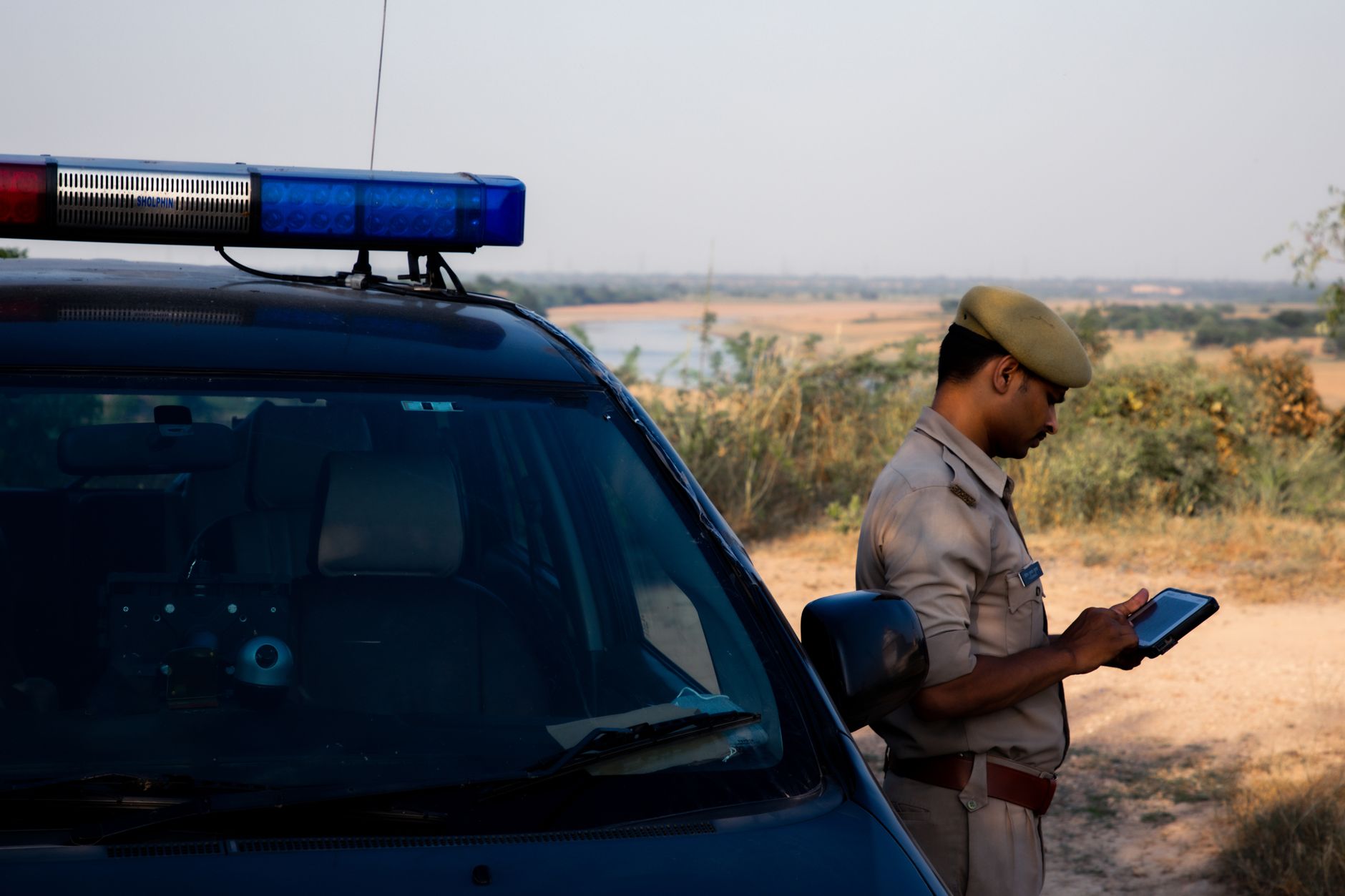
We know that ICE wants to deploy eyeglasses with facial recognition that can identify people in real time. Turns out Meta is prototyping the feature with a Pentagon supplier. (Alternate news story.)

Meta is reportedly developing facial recognition technology that could be integrated into eyewear, with a Pentagon supplier involved in the prototyping phase. This development comes as U.S. Immigration and Customs Enforcement (ICE) has expressed interest in deploying similar facial recognition glasses capable of real-time identification.
The specific nature of Meta's involvement and the capabilities of the technology remain largely undisclosed. However, the collaboration with a defense contractor suggests a potential application beyond typical consumer-facing social media features. The focus appears to be on creating a system that can scan faces and identify individuals in live environments.
While the source material does not detail the exact functionalities or the stage of development, the involvement of a Pentagon supplier indicates a potential for use in security or intelligence-gathering contexts. This aligns with ICE's stated interest in real-time identification capabilities through wearable technology.
The implications of such technology, particularly its potential deployment by law enforcement or military entities, raise significant privacy and civil liberties concerns. The ability to conduct real-time facial recognition in public spaces could fundamentally alter surveillance practices and individual freedoms.
Meta has previously explored facial recognition technology for its social media platforms, but has since largely phased out its use. This new prototyping effort, however, appears to be directed towards a different set of applications, potentially for government or defense purposes.
The Pentagon supplier's role in this prototyping suggests a focus on practical implementation and integration into existing or future operational systems. Further details regarding the specific supplier and the technical specifications of the eyewear are not available in the provided information.
The news highlights a growing trend in the development of wearable surveillance technology. As facial recognition capabilities become more sophisticated and integrated into everyday devices, the potential for widespread monitoring increases.
The connection to ICE's interest underscores the demand for such technologies within government agencies tasked with security and enforcement. The development by Meta, a major technology company, could accelerate the availability and adoption of these advanced surveillance tools.

A weakness has been identified in Tenda CP3 27.5.57.101. This issue affects some unknown processing of the file Net/NetCheckPing.cpp. This manipulation of the argument interface_name/host causes os command injection. The attack can be initiated remotely.
A security flaw has been discovered in Tenda CP3 27.5.57.101. This vulnerability affects the function SystemAsh of the file Apis/system.c of the component Kylin. The manipulation of the argument AlarmVoiceURL results in os command injection. It is possible to launch the attack remotely.

OpenAI has announced a $1 billion commitment to provide subsidized access to its Daybreak AI cybersecurity tools for under-resourced critical infrastructure defenders. The initiative, named Daybreak for Frontline Defenders, will offer AI models, training, and technical support over the next six months, prioritizing water and wastewater utilities, electric grid operators, and local government entities. This move aims to equip organizations with limited budgets and staff against increasingly sophisticated cyber threats.

Attackers are exploiting a new unpatched vulnerability in Magento Open Source and Adobe Commerce that lets them run malicious code on an online store's server without logging in, Dutch e-commerce security company Sansec said in an advisory published on September 5. Sansec, which discovered the flaw and named it StyleSmuggler, said attacks started on September 4. "Sansec is publishing early
In BPF instructions that load/store a value from/to a scratch memory register the register index is an unsigned 32-bit integer and must not exceed 15, but libpcap BPF interpreter does not validate the value. In particular uncommon use cases a crafted filter program can cause the interpreter to try reading and writing the OS process memory in the 16GiB starting at the current stack frame on 64-bit architectures and in the entire address space on 32-bit architectures.

Attackers are exploiting two new PaperCut flaws to steal credentials and gain privileged access in education-sector attacks across the U.S. and Europe. Attackers are exploiting two recelty disclosed PaperCut flaws, CVE-2026-81578 and CVE-2026-82078, in attacks targeting schools and other education organizations in the U.S. and Europe, as reported by TheHackerNews. Arctic Wolf researchers observed




