
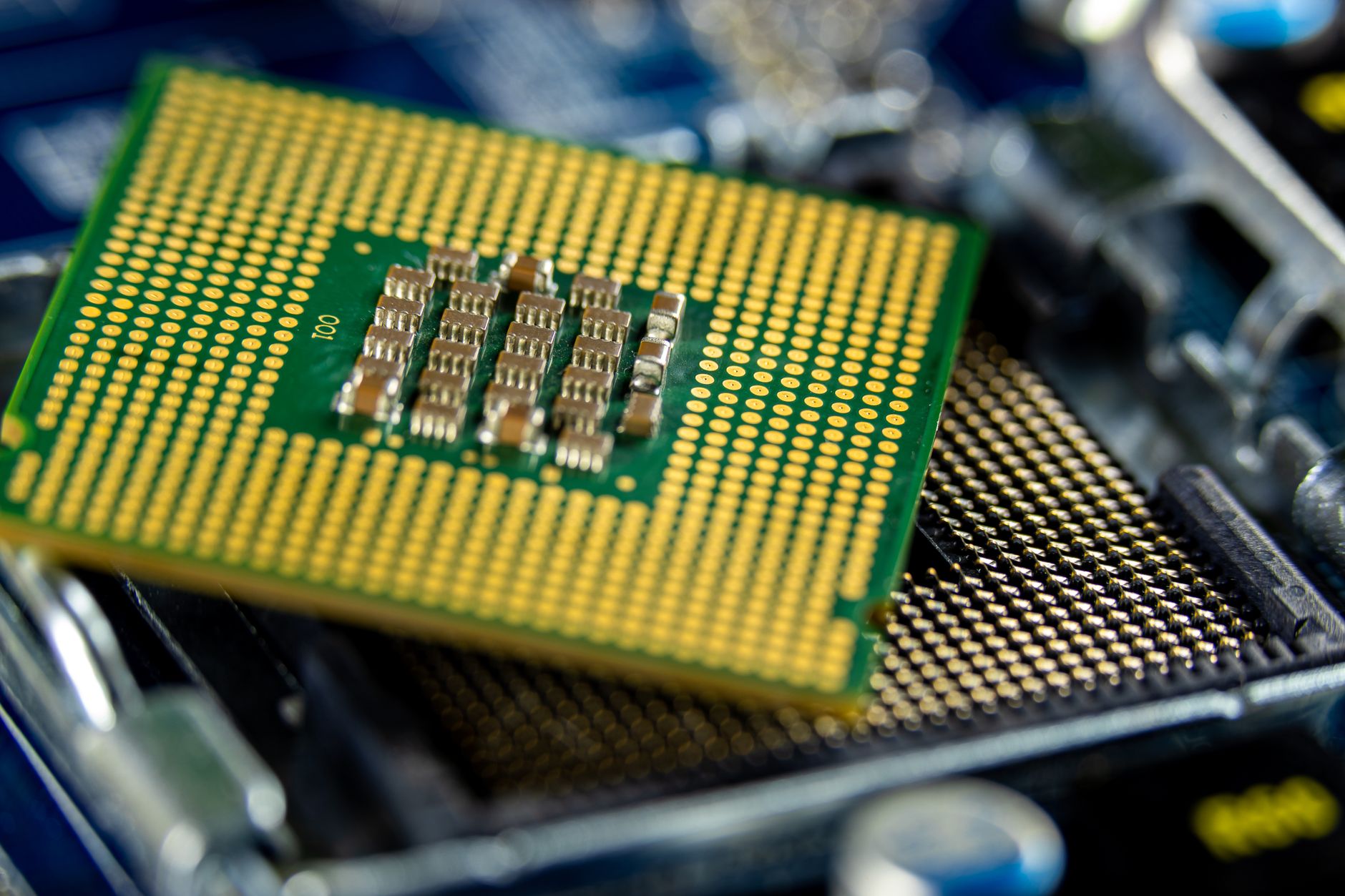
The Trusted Computing Group (TCG) has released new guidance to help organizations verify if their hardware, specifically Trusted Platform Modules (TPMs), is genuinely quantum-safe. This new benchmark addresses concerns that some TPMs claiming quantum-safe compliance may not offer full security capabilities. The guidance introduces designations for 'TCG PQC-ready TPM' and 'TCG PQC-upgradable TPM' to clarify readiness for post-quantum cryptography.

The Trusted Computing Group (TCG) has released new guidance to help organizations verify whether their hardware, specifically Trusted Platform Modules (TPMs), genuinely meet post-quantum cryptography (PQC) requirements. This move comes as businesses seek to future-proof their systems against potential quantum-enabled cyberattacks.
TCG, a non-profit organization focused on vendor-neutral standards for hardware-based security, published the guidance on August 24, 2026. TPMs are specialized security chips, often integrated into motherboards or processors, that securely store sensitive data such as passwords, digital certificates, and encryption keys. TPM 2.0, the second generation of these modules, is a requirement for Windows 11.
The organization emphasizes that TPMs will likely be crucial in PQC roadmaps due to their ability to maintain trusted identities, platform integrity, attestation, and hardware-anchored security over extended periods, potentially decades, as PQC algorithms evolve.
Not all TPMs currently available offer quantum-safe encryption, and some products advertised as "compliant" may not provide full, end-to-end security capabilities. To address this, TCG convened nearly 90 contributors in March 2026, including representatives from government, academia, and major technology companies like Intel, Google, Hewlett Packard Enterprise, Microsoft, NVIDIA, Lenovo, and STMicroelectronics. This collaboration led to the development of the TCG PC Client Platform TPM Profile (PTP) 1.07, which outlines the minimum requirements for PQC-ready TPMs.
The newly released accompanying document assists businesses in verifying if their TPMs comply with the PTP 1.07 standard. It also introduces two categories to describe a TPM's readiness for the PQC transition: 'TCG PQC-ready TPM,' for modules that already support the PQC capabilities defined in PTP 1.07, and 'TCG PQC-upgradable TPM,' for those designed to be upgraded to support the standard. These designations aim to simplify understanding a platform's PQC transition status.
TCG also announced plans to enhance its existing certification programs to specifically certify 'TCG PQC-ready TPMs,' further solidifying the verification process for quantum-safe hardware.

A weakness has been identified in Tenda CP3 27.5.57.101. This issue affects some unknown processing of the file Net/NetCheckPing.cpp. This manipulation of the argument interface_name/host causes os command injection. The attack can be initiated remotely.
A security flaw has been discovered in Tenda CP3 27.5.57.101. This vulnerability affects the function SystemAsh of the file Apis/system.c of the component Kylin. The manipulation of the argument AlarmVoiceURL results in os command injection. It is possible to launch the attack remotely.

OpenAI has announced a $1 billion commitment to provide subsidized access to its Daybreak AI cybersecurity tools for under-resourced critical infrastructure defenders. The initiative, named Daybreak for Frontline Defenders, will offer AI models, training, and technical support over the next six months, prioritizing water and wastewater utilities, electric grid operators, and local government entities. This move aims to equip organizations with limited budgets and staff against increasingly sophisticated cyber threats.

Attackers are exploiting a new unpatched vulnerability in Magento Open Source and Adobe Commerce that lets them run malicious code on an online store's server without logging in, Dutch e-commerce security company Sansec said in an advisory published on September 5. Sansec, which discovered the flaw and named it StyleSmuggler, said attacks started on September 4. "Sansec is publishing early
In BPF instructions that load/store a value from/to a scratch memory register the register index is an unsigned 32-bit integer and must not exceed 15, but libpcap BPF interpreter does not validate the value. In particular uncommon use cases a crafted filter program can cause the interpreter to try reading and writing the OS process memory in the 16GiB starting at the current stack frame on 64-bit architectures and in the entire address space on 32-bit architectures.

Attackers are exploiting two new PaperCut flaws to steal credentials and gain privileged access in education-sector attacks across the U.S. and Europe. Attackers are exploiting two recelty disclosed PaperCut flaws, CVE-2026-81578 and CVE-2026-82078, in attacks targeting schools and other education organizations in the U.S. and Europe, as reported by TheHackerNews. Arctic Wolf researchers observed




