
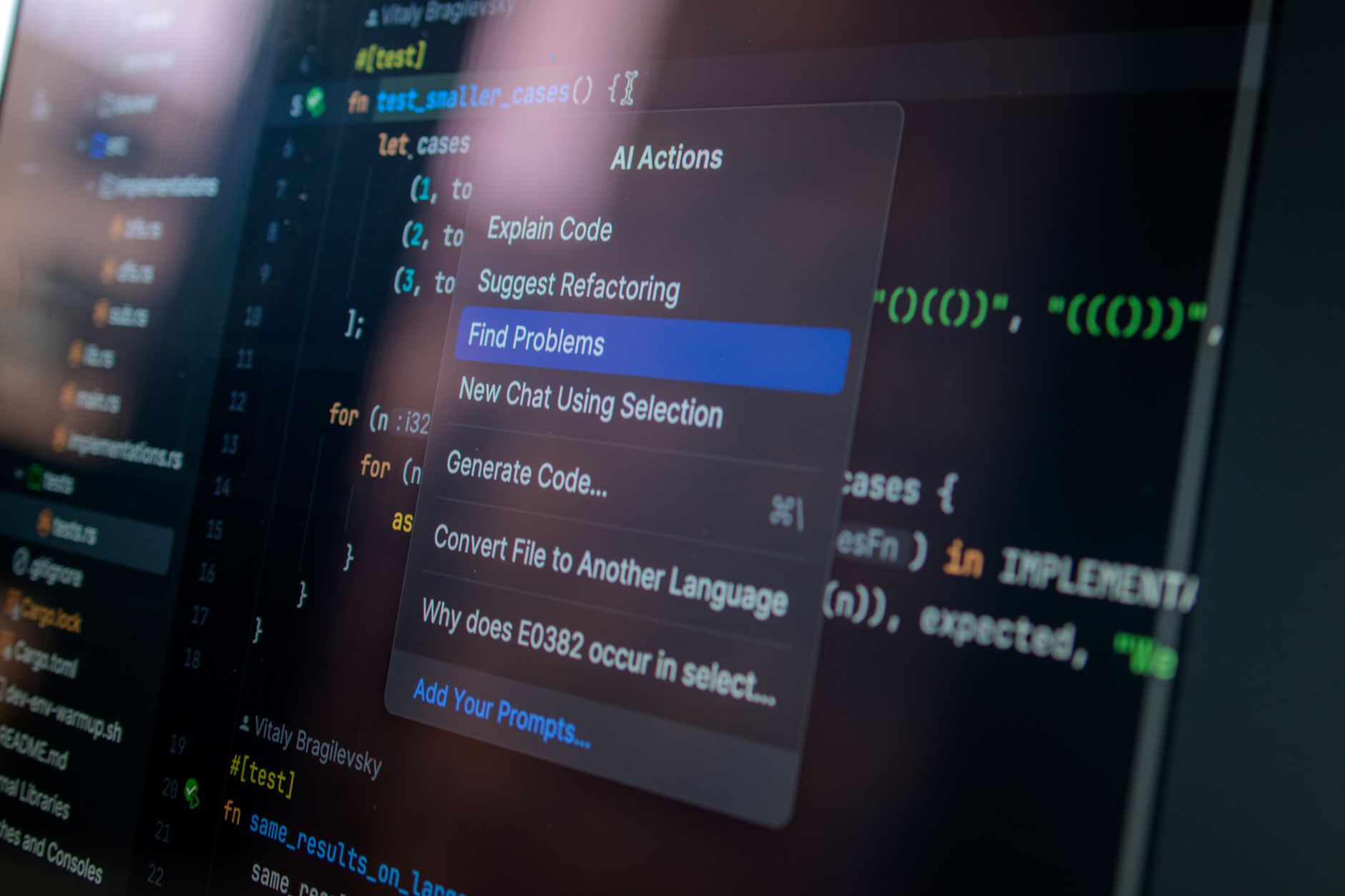
CISA is reportedly using Anthropic Mythos AI to scan government software for vulnerabilities. The audits are said to be led by the agency Attack Surface Evaluation team to strengthen federal security reviews.

The U.S. Cybersecurity and Infrastructure Security Agency (CISA) is reportedly employing artificial intelligence to enhance its security reviews of government software. Specifically, the agency is said to be utilizing Anthropic's Mythos AI tool for the purpose of scanning software for vulnerabilities.
This initiative is reportedly being spearheaded by CISA's Attack Surface Evaluation team. The team's objective is to bolster the rigor and effectiveness of federal security reviews, ensuring a more robust defense against potential cyber threats targeting government systems.
The use of AI in this capacity signifies a potential shift in how government agencies approach software security. By leveraging advanced AI capabilities, CISA aims to identify flaws that might be missed by traditional scanning methods or human auditors alone.
Anthropic's Mythos AI is designed to analyze code and identify potential security weaknesses. Its application by CISA suggests a move towards more proactive and automated vulnerability detection within the federal software ecosystem.
The Attack Surface Evaluation team's role in leading these AI-driven audits underscores CISA's commitment to a comprehensive approach to cybersecurity. Evaluating the attack surface of government software is crucial for understanding and mitigating potential entry points for malicious actors.
While specific details regarding the implementation and scope of these AI-powered scans were not provided, the reported use of Mythos AI indicates a strategic investment in cutting-edge technology to safeguard federal networks and data. The ultimate goal is to strengthen the overall security posture of government software.
This development aligns with broader trends in the cybersecurity industry, where AI and machine learning are increasingly being adopted to combat sophisticated cyber threats. Government agencies are often at the forefront of adopting such technologies to protect critical infrastructure and sensitive information.
The adoption of AI tools like Mythos by CISA for vulnerability scanning represents a significant step in modernizing federal cybersecurity practices. It highlights the agency's dedication to staying ahead of evolving threats and ensuring the integrity of government software.

A weakness has been identified in Tenda CP3 27.5.57.101. This issue affects some unknown processing of the file Net/NetCheckPing.cpp. This manipulation of the argument interface_name/host causes os command injection. The attack can be initiated remotely.
A security flaw has been discovered in Tenda CP3 27.5.57.101. This vulnerability affects the function SystemAsh of the file Apis/system.c of the component Kylin. The manipulation of the argument AlarmVoiceURL results in os command injection. It is possible to launch the attack remotely.

OpenAI has announced a $1 billion commitment to provide subsidized access to its Daybreak AI cybersecurity tools for under-resourced critical infrastructure defenders. The initiative, named Daybreak for Frontline Defenders, will offer AI models, training, and technical support over the next six months, prioritizing water and wastewater utilities, electric grid operators, and local government entities. This move aims to equip organizations with limited budgets and staff against increasingly sophisticated cyber threats.

Attackers are exploiting a new unpatched vulnerability in Magento Open Source and Adobe Commerce that lets them run malicious code on an online store's server without logging in, Dutch e-commerce security company Sansec said in an advisory published on September 5. Sansec, which discovered the flaw and named it StyleSmuggler, said attacks started on September 4. "Sansec is publishing early
In BPF instructions that load/store a value from/to a scratch memory register the register index is an unsigned 32-bit integer and must not exceed 15, but libpcap BPF interpreter does not validate the value. In particular uncommon use cases a crafted filter program can cause the interpreter to try reading and writing the OS process memory in the 16GiB starting at the current stack frame on 64-bit architectures and in the entire address space on 32-bit architectures.

Attackers are exploiting two new PaperCut flaws to steal credentials and gain privileged access in education-sector attacks across the U.S. and Europe. Attackers are exploiting two recelty disclosed PaperCut flaws, CVE-2026-81578 and CVE-2026-82078, in attacks targeting schools and other education organizations in the U.S. and Europe, as reported by TheHackerNews. Arctic Wolf researchers observed




