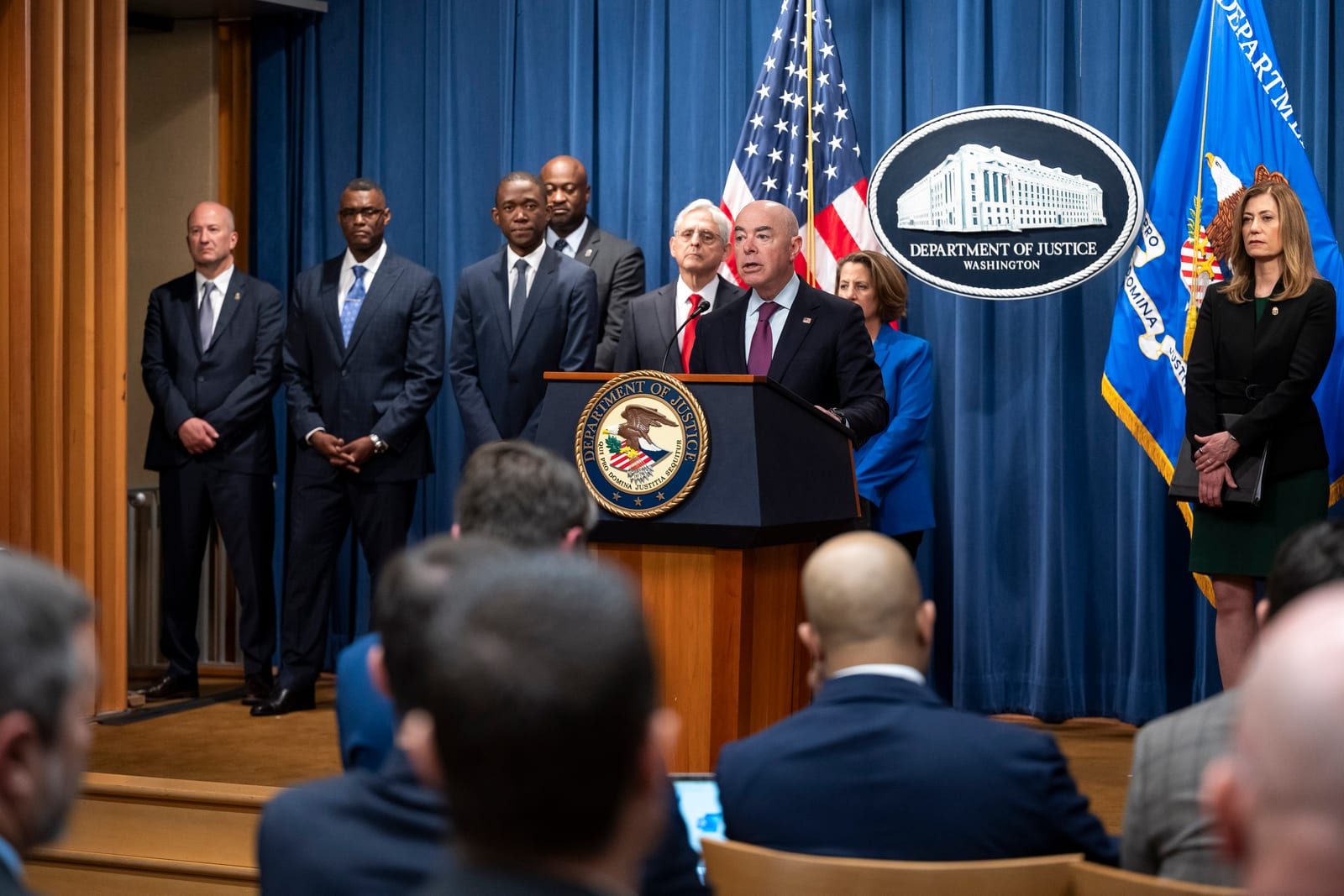
The United States Department of Justice announced on November 24 a sweeping anti-scam initiative, marking the largest coordinated crackdown on fraud in the country's history. This enforcement surge, which has resulted in over 400 cases and the indictment of more than 800 defendants across 85 federal districts, stems from Executive Order 14390. Signed by President Donald Trump on March 6, the order mandated that federal agencies prioritize the investigation and prosecution of cybercrime and fraudulent activities.
A central component of this effort is Operation Blackout, led by the FBI. This initiative focused on the physical infrastructure supporting global scam networks, successfully disrupting or dismantling 29 scam compounds located across Asia, Africa, and the Middle East. Beyond the legal proceedings, the operation resulted in the rescue of more than 2,200 individuals who had been trafficked into these facilities to perform forced labor.
The scope of the crackdown extends to international cooperation, with the Department of Justice confirming that 30 defendants have been extradited to the United States to face charges. Furthermore, the FBI reported that partner nations have arrested or detained more than 320 individuals linked to these operations, while over 50 people have been federally charged within the U.S. judicial system.
Financial recovery efforts have been significant, with the FBI’s Recovery Asset Team reporting the freezing of more than $350 million. Additionally, the agency claims that Operation Level Up has successfully prevented over $143 million in victim losses since the executive order was enacted in March. Collectively, the FBI reports that it has restrained nearly $17 billion in criminal funds associated with these illicit networks.
The U.S. Secret Service has also contributed to the initiative, reporting the restraint of over $200 million and the recovery of $119 million in stolen assets. The agency has disrupted approximately 1,780 domains utilized by scammers and is currently investigating more than 1,540 cases of business email compromise. Among these cases is a cryptocurrency investment scheme allegedly operated from Cambodia, which targeted at least 174 American victims. In connection with this specific investigation, a Chinese national was extradited from the Netherlands in October and subsequently arraigned in California.
The State Department has played a supporting role by funding collaborative efforts between U.S. and Southeast Asian authorities. These partnerships have led to the freezing of more than $1 billion in stolen cryptocurrency and the removal of over 1.4 million fraudulent websites and accounts.
The necessity for this crackdown is underscored by data cited by the Department of Justice, which references Gallup research estimating that scams cost Americans $68 billion in 2025. The research indicates that approximately one in 10 U.S. adults was directly impacted by these schemes or had a household member who was targeted.
Federal officials emphasized that the government is committed to pursuing scammers regardless of their geographic location. The Department of Justice stated that it intends to ensure that perpetrators cannot evade accountability by operating from abroad or hiding behind digital interfaces. These operations represent a multi-agency approach to addressing the global footprint of scam centers that have increasingly targeted U.S. citizens.