
News Archive
2809 stories · page 117 of 118Every story we've published, newest first. Vulnerability records live in the CVE Tracker.
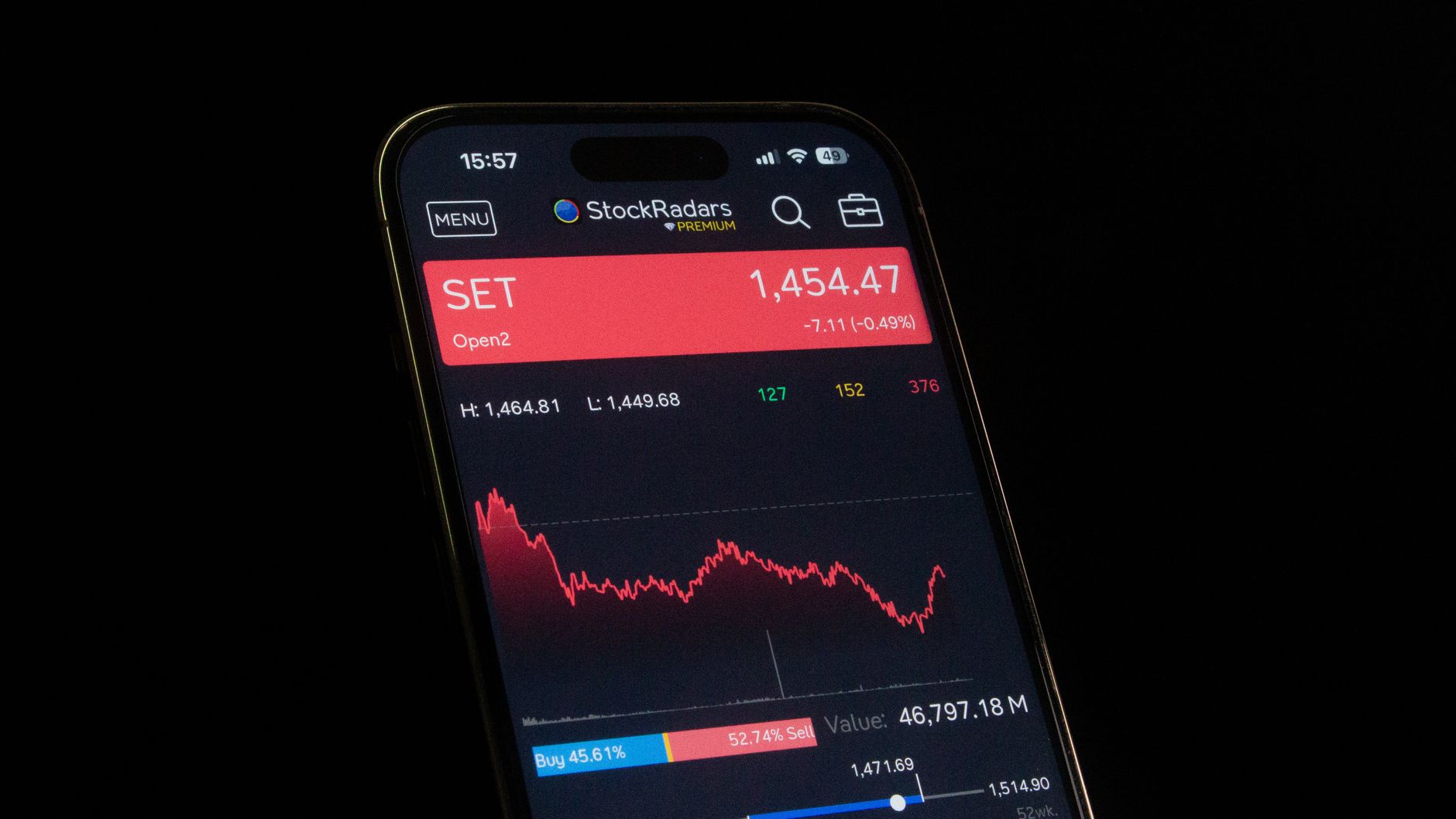
Cyber Breach Impact on Stock Prices Explored
Researchers investigated whether public indicators of cyber breaches can predict market reactions and inform trading strategies. They analyzed data from company filings, blogs, and social media to test a hypothesis suggesting shorting stocks after a breach becomes visible and then going long as the market recovers. The study found mixed results, questioning common assumptions about how the market values cyber failures.

Welcoming the Bahamian Government to Have I Been Pwned
The government of The Bahamas has joined a growing list of public sector entities utilizing the Have I Been Pwned (HIBP) service to enhance its cybersecurity posture. The National Computer Incident Response Team of The Bahamas, known as CIRT-BS, will now have access to HIBP's extensive database to monitor its government domains for potential data breaches.

A 0-click exploit chain for the Pixel 10: When a Door Closes, a Window Opens
Researchers have developed a two-exploit chain that can achieve root access on the Google Pixel 10, starting from a zero-click attack vector. This chain builds upon previous work that demonstrated a similar exploit for the Pixel 9.

Welcoming the Bangladesh Government to Have I Been Pwned
The government of Bangladesh has joined a growing list of nations utilizing the Have I Been Pwned (HIBP) service to enhance its cybersecurity posture. The BGD e-GOV CIRT department has been granted full access to HIBP's free government service, enabling them to monitor their official domains against data breaches.

EtherRat and TukTuk Malware Campaigns Lead to The Gentleman Ransomware
Malware campaigns utilizing EtherRat and TukTuk have culminated in the deployment of The Gentleman ransomware, according to recent analyses. These campaigns demonstrate a sophisticated, multi-stage approach, leveraging various tools and techniques to achieve initial access, maintain persistence, exfiltrate data, and ultimately encrypt systems.

Welcoming the Costa Rican Government to Have I Been Pwned
Costa Rica's government is now utilizing the Have I Been Pwned (HIBP) service to enhance its cybersecurity posture. The nation's Computer Security Incident Response Team (CSIRT) has been onboarded to HIBP's free government service, granting them the ability to monitor government domains against the vast dataset of breached information held by HIBP.

Weekly Update 503
Instructure, the company behind the Canvas learning management system, has not yet publicly addressed a potential data breach, despite a deadline set by a ransomware group known as ShinyHunters. The group had threatened to leak data allegedly stolen from Instructure by November 20th.

Cloud Worm PCPJack Steals Credentials and Evicts TeamPCP Artifacts
A newly identified cloud worm, dubbed PCPJack, is actively targeting exposed cloud infrastructure to steal credentials and remove any artifacts associated with the threat actor group TeamPCP. SentinelLabs researchers discovered the framework, which operates as a credential theft toolset that propagates across cloud environments.

Operation Road Trap: Fake toll and parking texts are spreading worldwide
Scammers are globally targeting drivers with fraudulent text messages impersonating toll operators, parking authorities, and transport agencies, according to a recent analysis by Bitdefender Labs. Since December 2025, researchers have tracked these "smishing" campaigns, which have sent over 79,000 deceptive messages across 12 countries. The active campaigns aim to trick recipients into paying…

AI threats in the wild: The current state of prompt injections on the web
Google's Threat Intelligence teams have been actively monitoring the web for real-world instances of indirect prompt injection (IPI), a significant threat vector targeting AI agents. IPI occurs when an AI system processes external content, such as websites or documents, containing malicious instructions that override the user's original intent. While the potential for IPI is widely discussed,…

Bringing Rust to the Pixel Baseband
Google is implementing a new security measure for its Pixel smartphones by introducing a DNS parser written in the Rust programming language into the firmware of the cellular modem. This development is part of an ongoing effort to bolster the security posture of the devices, particularly in areas prone to complex vulnerabilities.

Protecting Cookies with Device Bound Session Credentials
Google's Chrome browser is introducing a new security feature called Device Bound Session Credentials (DBSC) for Windows users, with support for macOS planned for the near future. This development is designed to significantly enhance protection against session hijacking, a common attack vector where attackers gain unauthorized access to user accounts by stealing session cookies.

Google Workspace’s continuous approach to mitigating indirect prompt injections
Google is detailing its ongoing efforts to combat indirect prompt injection attacks targeting its artificial intelligence features within Google Workspace, such as Gemini. These attacks aim to manipulate AI behavior by embedding malicious instructions within the data or tools that the AI accesses, often without the user's direct knowledge or interaction.

VRP 2025 Year in Review
Google's Vulnerability Rewards Program (VRP) marked its 15th anniversary in 2025 by distributing a record $17 million in rewards to more than 700 security researchers worldwide. This annual figure represents a substantial increase in payouts and researcher participation.

Security for the Quantum Era: Implementing Post-Quantum Cryptography in Android
Google is taking steps to secure Android against the potential threat of quantum computing by integrating post-quantum cryptography (PQC) standards into the operating system. This initiative represents a multi-year effort to safeguard sensitive data and transactions that could be vulnerable to decryption by future quantum computers.

Windsurf IDE Extension Drops Malware via Solana Blockchain
Security researchers have identified a malicious extension for the Windsurf Integrated Development Environment (IDE) that leverages the Solana blockchain to deploy a multi-stage malware payload. The extension, masquerading as a support tool for the R programming language, was designed to steal sensitive data from Chromium-based browsers.

On the Effectiveness of Mutational Grammar Fuzzing
Mutational grammar fuzzing, a technique that uses predefined grammars to guide sample mutation while preserving structural integrity, faces significant challenges that can hinder bug discovery despite its proven effectiveness. While the approach ensures generated samples adhere to structural rules, leading to the discovery of complex issues in areas like XSLT implementations and JIT engines,…

A Deep Dive into the GetProcessHandleFromHwnd API
The GetProcessHandleFromHwnd API, a Windows function that allows an application to obtain a handle to the process owning a specific window handle (HWND), has undergone significant changes since its introduction, with its original documentation containing several inaccuracies. Initially believed to be a convenience function relying on window hooks, its implementation and security properties…

Bypassing Administrator Protection by Abusing UI Access
A security researcher has detailed multiple vulnerabilities in Windows' User Account Control (UAC) system, specifically concerning the "UI Access" feature, which were present even before the introduction of Administrator Protection. These bypasses, totaling nine discovered by James Forshaw, have since been addressed by Microsoft. This article focuses on five of these issues, stemming from the…

Breaking the Sound Barrier, Part II: Exploiting CVE-2024-54529
A type confusion vulnerability in Apple's CoreAudio framework, identified as CVE-2024-54529, has been successfully exploited by a Google security engineer. The vulnerability resides within the `coreaudiod` system daemon, specifically in the `com.apple.audio.audiohald` Mach service. Researchers discovered that certain message handlers within this service would retrieve an object from an…

Bypassing Windows Administrator Protection
Microsoft's Administrator Protection feature, intended to replace User Account Control (UAC) with a more secure system for granting administrator privileges in Windows 11, has been found to be bypassable. The feature, introduced in Windows 11 version 25H2, aims to allow local users to access administrative rights only when necessary, creating a more robust security boundary. However, security…

A 0-click exploit chain for the Pixel 9 Part 3: Where do we go from here?
The Android ecosystem faces significant challenges in mitigating zero-click exploit chains, particularly concerning audio processing components and device drivers, according to recent research. While specific vulnerabilities in the Dolby UDC (Universal Decode Component) and a BigWave driver were identified and exploited, the broader implications highlight systemic issues in attack surface…

A 0-click exploit chain for the Pixel 9 Part 2: Cracking the Sandbox with a Big Wave
A security researcher has identified a critical vulnerability in the Linux kernel used by Google Pixel devices, specifically affecting the BigWave hardware accelerator. This flaw, if exploited, could allow an attacker to escape the restricted "mediacodec" sandbox and gain arbitrary read and write capabilities within the kernel. The vulnerability was discovered by Seth Jenkins, who detailed his…

A 0-click exploit chain for the Pixel 9 Part 1: Decoding Dolby
Google's Pixel 9 devices are susceptible to a zero-click exploit chain that targets the Dolby Unified Decoder (UDC), a component responsible for processing Dolby Digital and Dolby Digital Plus audio formats. This vulnerability allows for arbitrary code execution within the mediacodec context of the device, forming the first stage of a more complex attack. The exploit chain was developed by…