Cisco has unveiled a Quantum Network Controller, a research prototype designed to enable applications to request entanglement on demand from a quantum network, abstracting away the underlying hardware complexities. This controller manages the distribution of entanglement, a linked quantum state shared between distant points, which is a critical resource for quantum networks.
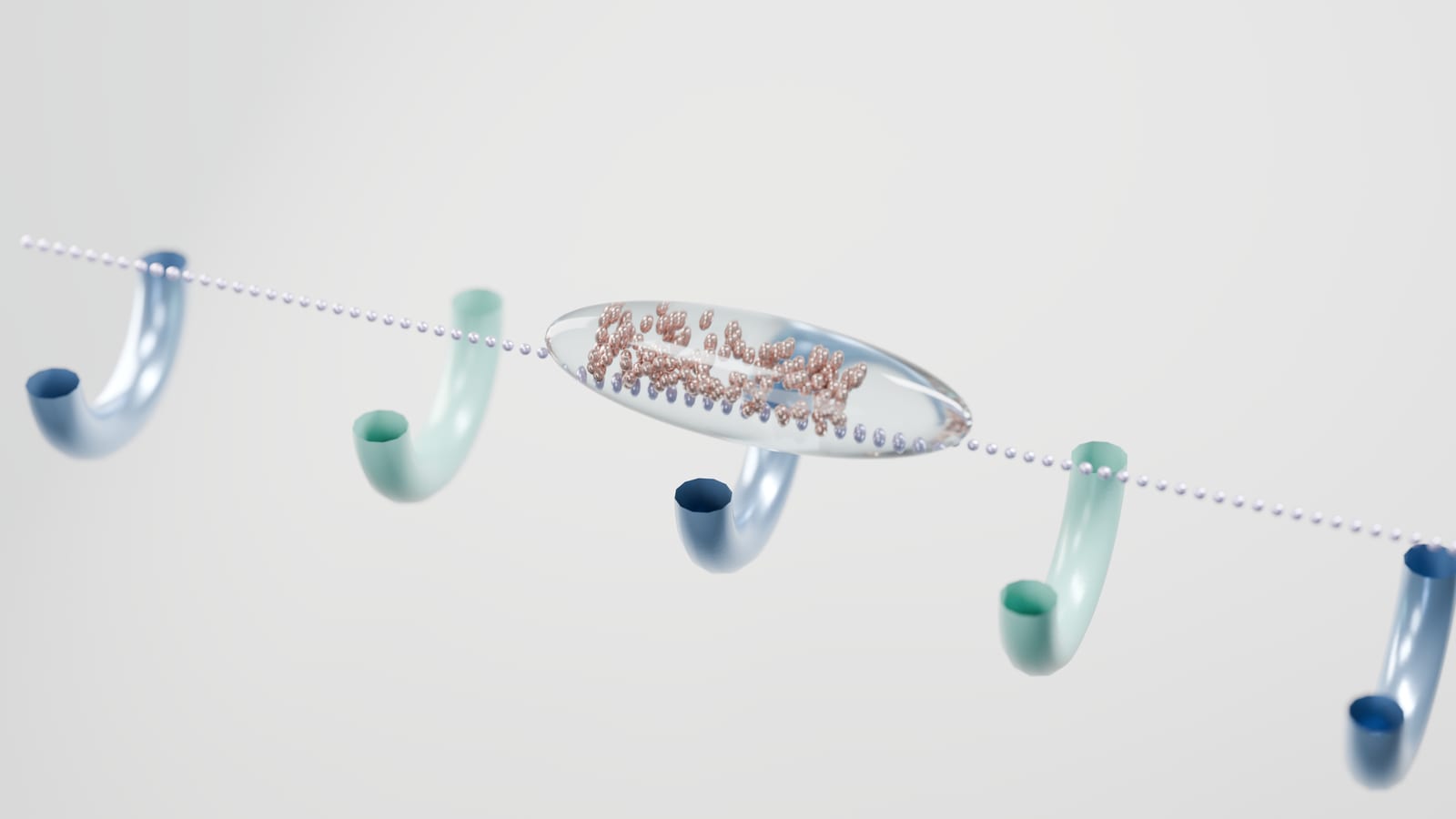
The development addresses a significant challenge in scaling quantum networks. Currently, operators must manually configure hardware for entanglement generation and distribution device by device, link by link. This point-to-point approach becomes unmanageable for larger networks, where a thousand nodes could require nearly 500,000 dedicated links. The Quantum Network Controller is intended to schedule entanglement delivery across Cisco's Universal Quantum Switch, another research prototype introduced earlier this year, which aims to replace numerous dedicated links with a shared fabric.
The controller provides a unified interface for different categories of quantum hardware, such as sources, switches, detectors, and timing systems, through a hardware abstraction layer. This allows vendors to integrate their devices consistently. Applications can specify their entanglement needs—including endpoints, rate, fidelity, and timing—without requiring knowledge of the specific hardware mechanisms involved. Cisco refers to this operational model as "Entanglement-as-a-Service."
Due to the inherent nature of quantum states, which are destroyed upon measurement, the controller cannot monitor traffic in the same way classical network tools do. Instead, it statistically measures link quality and employs predefined tuning, retries, or reinitialization when performance degrades. Human intervention is only required if these self-correction mechanisms fail. The system continuously monitors the link during an application's use and reclaims hardware resources once a task is completed.
Prior to the controller's introduction, Cisco successfully demonstrated multi-node entanglement distribution and swapping in February 2026. This test involved partner hardware and utilized 17.6 kilometers (approximately 11 miles) of deployed commercial telecom fiber in New York City. The polarization fidelity, indicating how closely the delivered quantum states matched the intended ones, exceeded 99 percent, achieved at room temperature.
The first native application to leverage the Quantum Network Controller is an updated Network-Aware Quantum Compiler. This compiler is designed to distribute a quantum program across multiple processors, calculate the necessary entanglement between specific nodes, and then submit these requests to the controller. The compiler uses the same interface available to third-party compilers. Cisco also plans for security and coordination applications, named Quantum Alert and Quantum Sync, to utilize the same entanglement request mechanism. Hardware from companies like Brooklyn-based Qunnect and Swabian Instruments is designed to integrate under the controller's abstraction layer.
According to Vijoy Pandey, senior vice president of Outshift by Cisco, the new system allows quantum networks to be treated as a service-delivery platform, benefiting application developers, operators, and hardware vendors alike.