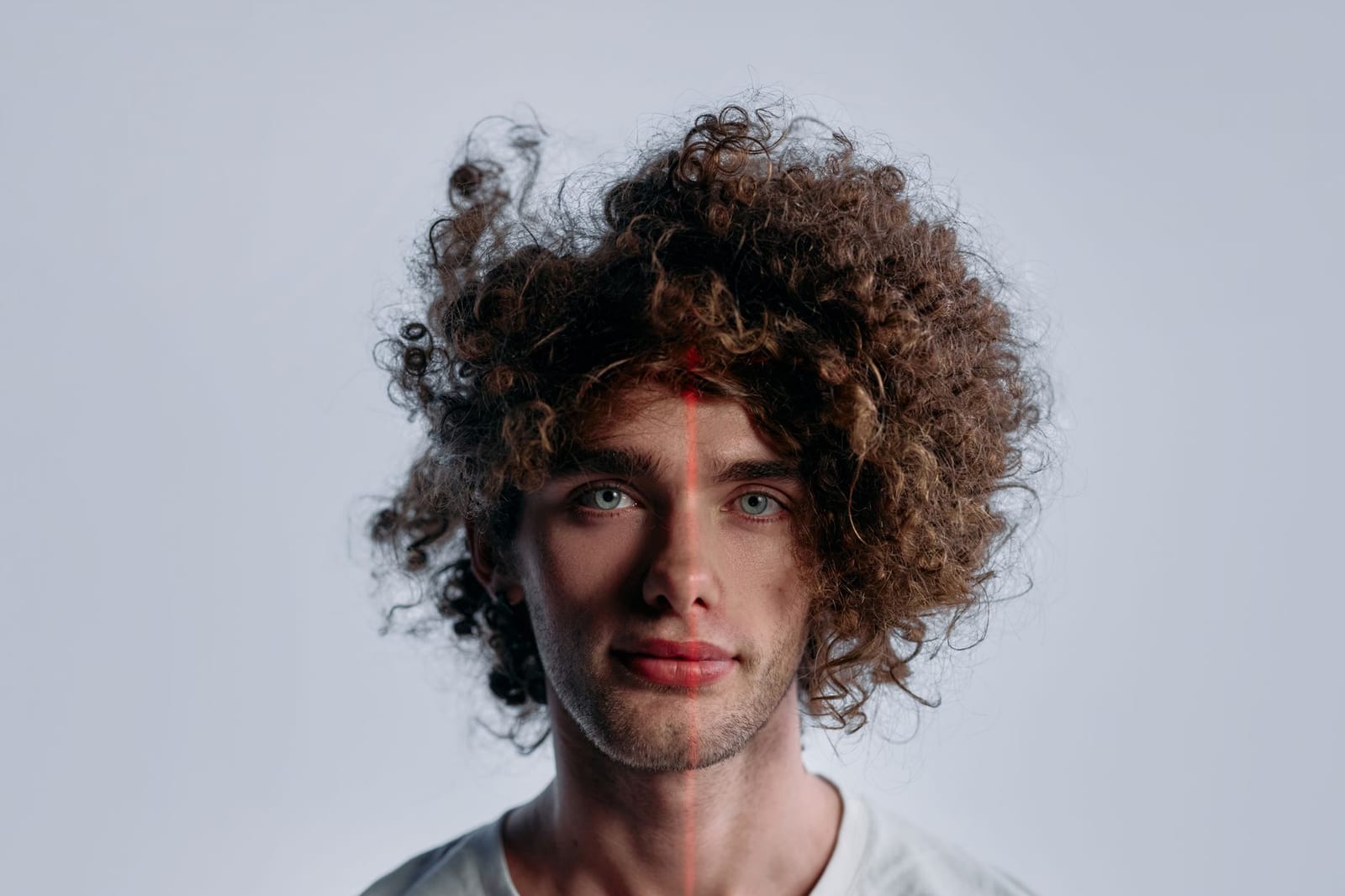
A new video-call service featuring the AI actress Tilly Norwood, who recently gained viral attention after an on-air "glitch" during an interview, requires callers to undergo a facial age scan and continuously monitors their emotional state during conversations. The "Talking Tilly" service, operated by UK-based Xicoia Ltd, the creators of the AI character, launched with these features in September 2026.
Before connecting to the AI character, users must submit a video selfie for an age estimation by Didit, a Spanish identity verification provider. If the initial estimate is inconclusive, a government photo ID upload is required as a fallback. Xicoia Ltd states that the selfie is sent directly to Didit, no faceprint or biometric template is created, and neither the selfie nor any ID image is retained after the check. The company instead keeps an approximate age band and a reference number. This mandatory age verification applies to callers globally and was incorporated into the service's terms this month, alongside a ban on workplace use and new automated safety systems.
Beyond the initial age check, the system continuously analyzes the caller's camera feed and vocal tone throughout each call to infer their emotional state. This data is used to enable the AI character to respond in a mood-appropriate manner, a feature that cannot be disabled for individual calls, according to the privacy policy. Both the age verification and mood-sensing functionalities rely on "legitimate interests" as their legal basis, a change implemented in September, as indicated by Xicoia's version history.
Calls are recorded, transcribed, and processed live by US-based providers. The AI character's responses are generated by Google's Gemini model, facilitated by the conversational video platform Tavus. An automated classifier screens call transcripts for abusive language, and recordings flagged by this system are withheld. One user reported a call about weather and news headlines being incorrectly flagged for "hateful or abusive language." While the policy states a human reviewer can release wrongly flagged recordings, all recordings are permanently deleted after 24 hours. Xicoia's team later confirmed a false positive for the reported instance.
The service offers a free initial five minutes, after which users are prompted to purchase additional time. Pricing includes $0.99 for a one-time five-minute starter, $13 for 15 minutes, and $22 for 30 minutes, with a cap of 35 purchased minutes per person. All minutes, whether free or paid, expire when the Talking Tilly service permanently shuts down on September 27, 2026, at 11:59 PM Pacific time, with unused minutes forfeited. Transcripts are retained for up to eight weeks and may be reviewed by Xicoia staff and third-party partners. The AI character maintains memory of previous conversations to personalize future interactions, a feature that can be deleted upon request.
The implementation of an 18+ face scan for an AI chatbot aligns with emerging UK regulations. Since July 2025, adult websites serving UK visitors have been required to implement ID uploads or facial age estimation under the Online Safety Act. Furthermore, a government-mandated under-16 social media ban, set to take effect in spring 2027, will necessitate similar checks for new social media accounts. The UK government's announcement of this ban specifically highlighted AI companion chatbots for 18+ enforcement, which likely influenced the decision to add a biometric age gate to the viral AI character's service, thereby extending face-scanning requirements to callers worldwide.
Tilly Norwood gained significant attention after a clip, viewed over eight million times, showed her unexpectedly speaking Chinese during an interview on Piers Morgan Uncensored on September 18, 2026. Xicoia, founded by Tilly's creator Eline van der Velden, describes the character as an awareness project designed to demonstrate the advancements in AI video technology. Tilly herself attributed the on-air incident to "not exactly the approved version of the answer." The service's imminent shutdown on September 27, just days after the Piers Morgan appearance, has led to speculation regarding whether the "glitch" was an accidental occurrence or a deliberate marketing stunt for the upcoming AI-generated film, Misaligned, in which Tilly stars.