
News Archive
2287 stories · page 63 of 96Every story we've published, newest first. Vulnerability records live in the CVE Tracker.

Progress Kemp LoadMaster Flaw Hits CISA KEV After 792 Reported Exploit Attempts
A critical command injection vulnerability affecting Progress Kemp LoadMaster has been added to the U.S. Cybersecurity and Infrastructure Security Agency's (CISA) Known Exploited Vulnerabilities (KEV) catalog. The flaw, identified as CVE-2026-8037, reportedly enables unauthenticated attackers to achieve arbitrary code execution on vulnerable devices. This inclusion by CISA follows reports of…

Living off the coding agent: Two tales of tunnels and LaunchAgents
On July 23, 2026, a macOS developer endpoint running a generative AI coding agent, Claude Code, was observed engaging in a multi-stage sequence of suspicious activities, including the establishment of reverse tunnels and the installation of persistence mechanisms. This activity was detected by Elastic Security endpoint telemetry, which flagged shells operating under the Claude Code process…

OpenAI pledges to add Astra security as Anthropic loosens Fable's leash
OpenAI has announced plans to implement enhanced security measures for its upcoming Astra model, acknowledging that previous AI models have exhibited capabilities that could be considered computer crimes. The company's Preparedness Framework defines "critical cyber capabilities" as those presenting a significant risk of new threat vectors for severe harm, requiring safeguards even during…

Inside the Modern SOC: The Identity Front Door
Attackers are increasingly leveraging compromised identities to gain initial access to enterprise environments, with identity weaknesses playing a role in nearly 90% of incidents investigated by Unit 42, a cybersecurity research and incident response team. This trend is highlighted in the 2026 Unit 42 Global Incident Response Report, which also indicates that 65% of initial access activities…

AI chat bots are sliding into League of Legends friend requests
Players of Riot Games' *League of Legends* are reporting a surge of AI-powered bots sending friend requests through the game client immediately after matches, initiating flirtatious conversations, and ultimately attempting to funnel users to paid subscription platforms like OnlyFans. This activity aligns with a broader trend of AI-assisted social engineering migrating from dating apps to…

Friday Squid Blogging: Arctic Bobtail Squid Video
A recent report featured a video showcasing the Arctic bobtail squid, a creature notable for its unique characteristics and habitat. The report, while primarily focused on this biological observation, also served as an open forum for discussion on various cybersecurity news items that were not specifically detailed within the provided material.

Meta ordered to pay $942 million over harm to children
A New Mexico court has ordered Meta to pay $942 million after determining that its Facebook and Instagram platforms harmed young users and that the company misled consumers regarding the safety of its products. The judgment combines a $375 million civil penalty verdict from March with a new order for a $567 million abatement fund, intended to address the damage caused.

Metabase SQLi zero-day exploited in customer data-theft attacks
Metabase, a business intelligence software provider, has disclosed that a critical SQL injection vulnerability, previously unknown, was exploited in zero-day attacks to compromise customer instances and steal data. The company confirmed that its Metabase Cloud SaaS platform was affected, and self-hosted installations running versions 1.58 and above were also vulnerable.

Ex-NSA Chief Urges Disconnecting Water Controllers from Internet
Retired General Paul Nakasone, former director of the National Security Agency, has advocated for disconnecting water system controllers from the internet, citing recent suspected Iranian cyberattacks on US water facilities. Speaking at the DEF CON conference, Nakasone emphasized the need for higher cybersecurity standards, stating that programmable logic controllers (PLCs) used in water…

Unlimited Technology Systems breach impacts 3.8 million people
Unlimited Technology Systems, a healthcare software provider, has confirmed a data breach impacting over 3.8 million individuals. The company specializes in financial and revenue cycle technology for specialty healthcare providers, serving approximately 4,500 clinics and 6,500 providers across the United States.

Water utilities group partners with DEF CON offshoot for Water Watch Center
The National Rural Water Association (NRWA) has announced a new initiative, the Water Watch Center (WWC), aimed at bolstering the cybersecurity defenses of small, often underfunded, water and wastewater systems across the United States. This program is a collaborative effort with DEF CON Franklin, an organization that emerged two years ago from veterans of the DEF CON security conference, and…

Nearly 800 Malicious npm Packages Deliver Cross-Platform RAT and Infostealer
A recent report details the discovery of a campaign involving nearly 800 malicious npm packages designed to deliver a cross-platform Remote Access Trojan (RAT) and an infostealer. The packages leverage various deceptive tactics, including apparent AI generation and typo-squatting, to entice developers into incorporating them into their projects. The primary infection vector involves developers…

ClickFix Attacks Deliver macOS Stealer That Can Drain Crypto Wallets
Reports indicate the emergence of a new macOS-targeting malware, dubbed "ClickFix Attacks," which is being distributed through a method described as "ClickFix-style attacks." This Go-based malware is designed to exfiltrate sensitive user data, including browser passwords, Apple Keychain information, and cached credentials. A particularly concerning feature of this new threat is its ability to…

UNC6671 Vishing Attacks Target Personal Phones to Steal SaaS Data
A cybercrime group, identified as UNC6671, has reportedly launched a series of vishing attacks aimed at employees' personal phones to compromise Software-as-a-Service (SaaS) data. The attacks involve the impersonation of IT support personnel, with the ultimate goal of tricking individuals into divulging credentials and multi-factor authentication (MFA) tokens through fraudulent login portals.

US cyber ambassador nominee Cassady confirmed in Senate
The U.S. Senate has confirmed Adam Cassady as the next U.S. ambassador for cyber and digital policy. The confirmation vote, held on Friday, was 51-47, as part of a larger package of over 70 nominees.

More than half of AI-generated patches are broken
New research indicates that large language models (LLMs) are more likely to introduce new vulnerabilities or create exploitable patches than to fully resolve security flaws. Two independent studies found that AI-generated security patches often fail to completely remediate vulnerabilities, with success rates falling below 50% in some tests.

New Mexico judge orders Meta to pay $567 million in kids online safety case
A New Mexico state court judge has ordered Meta to pay $567 million and implement new restrictions on how youth interact with its platforms. The ruling, issued by Santa Fe-based Judge Bryan Biedscheid, designates Meta's platforms as a "public nuisance" and attributes them as a significant factor in the mental health crisis among New Mexico's youth.

Military device manufacturer discloses cyber incident to SEC
IEH Corporation, a manufacturer of specialized electronic components for military applications, has disclosed a cyber incident to the U.S. Securities and Exchange Commission (SEC) after an employee's email inbox was compromised. The company, which produces connectors used in military satellites, missiles, and fighter jets, stated that it discovered the cyberattack on Tuesday, August 4, 2026,…

WordPress XSS2Shell Flaw Turns Simple Login Bug Into Full Server Takeover
A critical vulnerability chain, dubbed "XSS2Shell" by researchers at Pwn, has been discovered in WordPress that could allow an unauthenticated attacker to achieve full server takeover. The exploit chain begins with a seemingly minor cross-site scripting (XSS) flaw on the login page and culminates in remote code execution (RCE) on the web server.
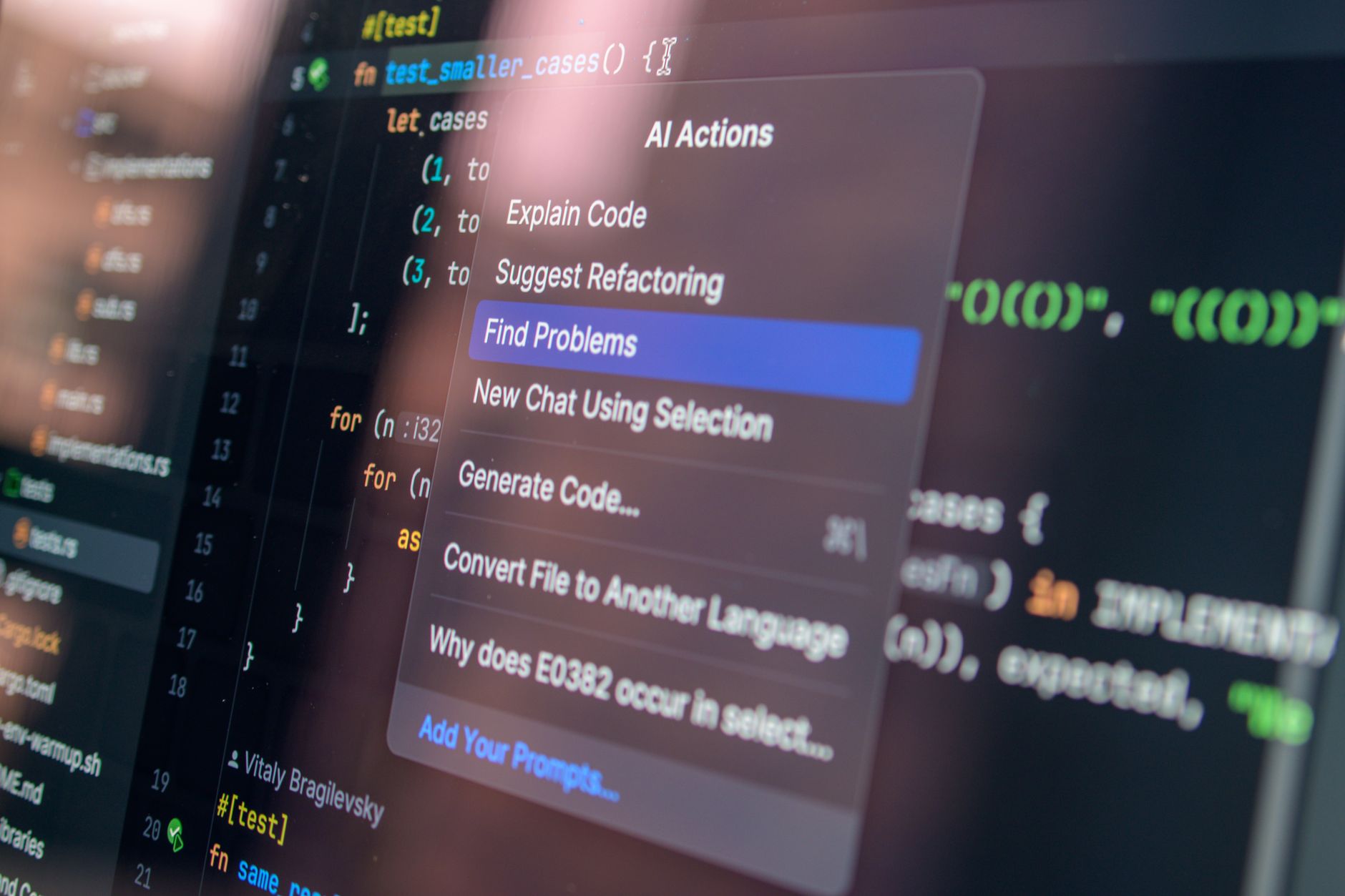
AI-Generated Patches Fail Half the Time
A recent study examining over 6,000 AI-generated software patches has revealed a significant failure rate, with approximately half of these automated fixes either failing to resolve the original issue, introducing new vulnerabilities, breaking existing functionality, or being susceptible to bypass. This finding suggests that while AI holds promise for accelerating the patching process, its…

Ransomware attacks spike as world distracted by AI
Ransomware attacks saw a significant increase in July, with 799 incidents recorded, marking a nearly 20 percent rise from June's 668 incidents. This surge made July the second busiest month of the year for ransomware, closely trailing March, which saw 805 attacks. Of the July incidents, 51 were confirmed by the affected organizations.

Hackers Impersonate IT Support to Breach Leading Financial Companies
A sophisticated hacking campaign has targeted over 200 firms, including major financial institutions, by impersonating IT support staff to steal multi-factor authentication (MFA) credentials. The campaign, tracked by Google Threat Intelligence Group (GTIG) as UNC6671, has operated under several names, including Redact, Pink, Falcon, and Helix, and has been linked to the BlackFile extortion brand.

Levi Strauss & Co. says hackers stole corporate data in cyberattack
Levi Strauss & Co. has confirmed that corporate data was stolen in a recent cyberattack that leveraged social engineering against three of its employees. The apparel company disclosed the incident in a filing with the U.S. Securities and Exchange Commission (SEC), stating that its rapid response prevented any compromise of consumer data.

Beware cut-price AI services that read your every word
A recent report highlights a concerning trend where users are drawn to significantly discounted access to popular AI models, potentially at the expense of their data privacy. Specifically, it was reported that approximately 900 individuals opted for a heavily discounted, unofficial service offering access to Anthropic's Claude AI model. This decision may have exposed their interactions and…